Cultural, historical, adventure, and custom customized trips are just a few of the tours that Deluxe trips offer in Egypt and Jordan.

The hardest part of planning a Cairo-plus-Nile trip usually isn't picking sites—it's sequencing them correctly. Cairo's monuments (Giza, the Egyptian Museum, Old Cairo) work as a self-contained 2-3 day block regardless of season, but the Nile cruise leg runs on fixed weekly departure days between Luxor and Aswan, so the cruise date—not the flight date—should anchor the whole itinerary. Building backward from an available cruise departure, rather than forward from an arrival date, is what actually prevents the scheduling gaps Deluxe Tours Egypt sees most often in cairo and nile cruise tour packages people try to piece together on their own.
The Pyramids of Giza weren't built by slaves, despite the popular myth—excavations of a nearby workers' village uncovered evidence of a paid labor force housed on-site, complete with bakeries, breweries, and medical facilities for treating workplace injuries. Skeletal remains show healed fractures that had clearly received medical care, and graffiti left by work crews inside the pyramids' internal chambers even names specific teams, suggesting organized, semi-skilled labor rather than forced servitude.
Practical Tip: Arrive early to explore the plateau before booking a cairo pyramids and nile cruise package that includes a stop at the nearby workers' village and cemetery excavation site—a far less crowded stop that reframes how the pyramids were actually built.

The building itself took nearly two decades to complete, delayed repeatedly by the 2011 revolution, funding gaps, and a global pandemic—ground broke in 2002, but the museum only reached full public opening more than 20 years later. Its triangular glass facade was deliberately angled to align with the Giza pyramids visible on the horizon, and the structure was engineered to withstand earthquakes given its proximity to a 4,500-year-old site that can't risk vibration damage.
Practical Tip: Time your visit for late afternoon when sunlight through the glass facade lines up with the pyramids in the distance—a detail the architects designed intentionally.

Long before it became a tourist bazaar, Khan el-Khalili started as a caravanserai—a walled trading post built in 1382 where merchants arriving via camel caravan from Africa and Asia could rest, store goods, and trade under one roof. The market grew organically around that original structure over centuries, which is why its layout still feels less like a planned street grid and more like a maze: sections were added piecemeal by different rulers, each specializing in a different trade guild, from goldsmiths to spice merchants to leather workers.
Practical Tip: Notice how certain alleys still cluster by trade—one lane is mostly gold and silver, another mostly spices—a layout leftover from the original guild system centuries ago.

The Hanging Church's wooden ceiling is built in the shape of Noah's Ark turned upside down, a deliberate architectural choice by its original builders meant to symbolize the church itself as a vessel of salvation. Inside Old Cairo, the church also holds one of Egypt's oldest collections of ivory-inlaid icons and a marble pulpit resting on 13 columns—one for Christ and the twelve apostles, with one column left deliberately plain, believed by some to represent Judas.
Practical Tip: Look up at the ceiling structure and count the pulpit's columns—both details carry intentional religious symbolism that's easy to miss without knowing to look for it.

The Citadel wasn't built purely for defense—Saladin chose the Mokattam Hills site in the 12th century partly because its elevation and natural spring made it self-sufficient during a siege, but later Ottoman rulers expanded it into a full royal residence and seat of government that stayed in continuous use for nearly 700 years. The Mosque of Mohammad Ali itself was a 19th-century addition, deliberately built in Ottoman style to replace an older Mamluk mosque, as Muhammad Ali sought to visually announce a break from the previous ruling dynasty.
Practical Tip: Look for the contrast between the Citadel's older Mamluk-era walls and the newer Ottoman-style mosque—the shift in architectural style marks a deliberate political statement by Muhammad Ali.

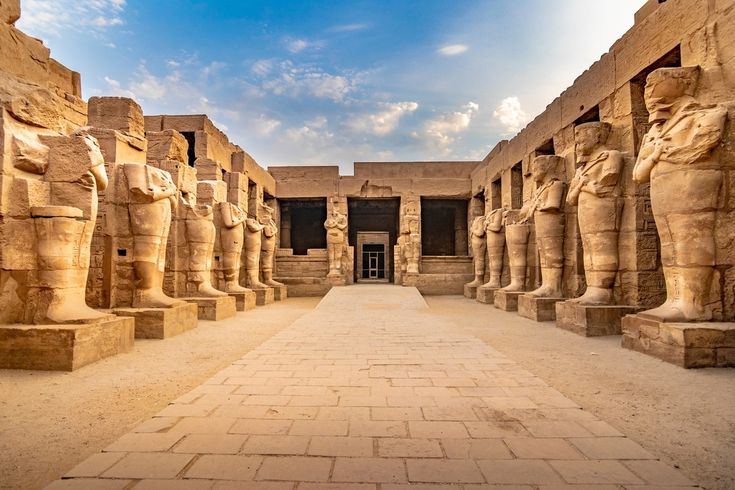
Karnak's Great Hypostyle Hall wasn't just architecturally massive—its 134 columns were designed to recreate a papyrus marsh in stone, with column capitals carved as either open or closed papyrus blooms, evoking the primordial swamp ancient Egyptians believed the world emerged from at creation. The hall's roof, largely collapsed today, once sat 80 feet up, meaning ancient visitors would have walked through near-total darkness except for shafts of light filtering through small clerestory windows near the ceiling—an intentional effect meant to feel otherworldly.
Practical Tip: Visit Karnak Temple around midday when overhead sun best reveals how the original clerestory lighting would have worked, even with the roof gone.

The vivid colors surviving in tombs like Ramses VI's owe their preservation to an accident of geography as much as craftsmanship—the valley's location deep in a dry limestone canyon, sealed off from Nile flooding and humidity, created a natural climate-controlled vault where pigments made from ground minerals (malachite for green, ochre for yellow) never faced the moisture that destroyed similar paintings elsewhere in Egypt. Ironically, modern tourism now poses more risk to the Valley of the Kings than 3,000 years of desert ever did—visitor breath and body heat raise humidity inside sealed chambers, which is why several tombs rotate closures to let humidity levels reset.
Practical Tip: If a specific tomb you wanted to see is closed on rotation, ask your guide which comparable tomb is currently open—closures rotate specifically to manage humidity, not random maintenance.

Unlike most Egyptian temples dedicated to a specific god, Luxor Temple was built to reaffirm the pharaoh's divine right to rule—every reigning king, from its original 14th-century BCE construction through Ramses II's later additions, performed the Opet Festival rituals here specifically to renew their connection to the god Amun and legitimize their kingship. Even Alexander the Great later added his own shrine inside the temple, deliberately tying his rule to this same tradition of pharaonic renewal centuries after the original builders.
Practical Tip: Look for Alexander the Great's shrine inside the temple's inner sanctuary—a detail many visitors walk past without realizing a Greek conqueror inserted himself into this distinctly Egyptian ritual, best combined with a best time of year for nile cruise visit in the cooler months.

Hatshepsut's temple architect, Senenmut, designed the structure to align precisely with the winter solstice sunrise, which streams directly into the temple's inner sanctuary once a year—an alignment scholars believe was meant to connect Hatshepsut's rule to the sun god Amun-Ra at the moment of the year associated with rebirth. After her death, her successor Thutmose III had many of her images and cartouches chiseled off the temple walls, an attempt to erase her legacy that ironically helped preserve some reliefs by leaving blank, unweathered stone in their place.
Practical Tip: Look closely at some of the wall reliefs for smoothed-over sections where Hatshepsut's image was deliberately chiseled out after her death—a visible trace of the political effort to erase her from history.

Kom Ombo also functioned as an ancient medical center—one wall panel near the rear of the temple depicts what scholars believe is one of the earliest known surgical instrument sets ever recorded, showing scalpels, forceps, and other tools laid out in relief, alongside inscriptions linking the site to Egyptian medical practice and healing rituals performed for pilgrims. Some researchers connect this to the temple's dedication to Haroeris, who carried associations with healing in certain regional traditions.
Practical Tip: Ask your guide to point out the surgical-tools relief on the rear exterior wall—it's easy to miss but is one of the more unusual carvings in any Egyptian temple, best paired with a stop via one of the best luxury nile cruise ships docking at Kom Ombo Temple.

Getting to Edfu itself used to be part of the experience—for decades, the short stretch from the Nile docks to the temple entrance was covered exclusively by horse-drawn caleche carriages, a tradition dating back to when cars first appeared in Upper Egypt but were kept out of the immediate temple area to preserve the ancient site. Only in recent years have some cruise operators introduced electric tuk-tuks and private vehicle transfers as an alternative, though the carriages remain the default for travelers who don't arrange transport in advance.
Practical Tip: When reviewing your luxor to aswan nile cruise price, confirm whether private transfer to Edfu's entrance is included—it's a small detail that spares you the crowded caleche queue at the docks.

Philae's isolation on an island was actually the point from the start—ancient Egyptians considered the original island (now submerged) sacred ground specifically because it was cut off from everyday life, and priests who served Philae Temple lived under strict purity rules tied to that separation, including ritual bathing and dietary restrictions not required of priests at mainland temples. Some inscriptions found on site also reference the island as one of several legendary burial spots claimed for the god Osiris, adding another layer of sacred significance beyond its dedication to Isis.
Practical Tip: Ask your guide about the island's reputation among ancient priests as uniquely sacred ground—it explains why Philae's rituals and priestly requirements differed from mainland Egyptian temples.

Elephantine Island, one of the felucca's classic routes near Aswan, gets its name from ancient granite boulders in the river that early travelers thought resembled elephants from a distance—the island was also Egypt's southern frontier for millennia, home to a customs and trading post that taxed goods moving between Egypt and Nubia. Kitchener's Island nearby has an entirely different origin story: it was turned into a botanical garden in the early 1900s by British Lord Kitchener, who imported plant species from across the British Empire, from India to Malaysia, purely for his personal collection.
Practical Tip: Ask your felucca captain to point out where Elephantine Island's ancient boundary stones once marked Egypt's southern frontier—a detail most sunset cruises skip entirely, best combined with a cairo and nile river cruise 7 days itinerary.

The smaller of the two Abu Simbel temples was something genuinely rare for its time—Ramses II dedicated it jointly to the goddess Hathor and his favorite wife, Nefertari, giving her statues at the entrance the same height as his own, a striking departure from convention where queens were almost always depicted smaller than their pharaoh husbands. Inscriptions inside make clear this was a deliberate political statement about Nefertari's status, not just a personal tribute.
Practical Tip: Compare the entrance statue heights at the smaller temple—Nefertari's statues stand equal to Ramses II's, a detail worth noting since it broke from standard pharaonic convention.

Most of today's Nubian villages near Aswan aren't in their original location—the community was displaced twice in the 20th century, first when the original Aswan Dam was raised in 1912 and 1933, then again when the High Dam's construction in the 1960s flooded their ancestral homeland entirely, submerging it under Lake Nasser. Families relocated their building style along with themselves, recreating the same courtyard layouts and painted facades their communities had used for generations, even though the specific villages sit on entirely new land today.
Practical Tip: Ask a local host about their family's original village before the resettlement—many families still identify strongly with their pre-1960s homeland, even generations later.

Domestic flights between Cairo and Luxor/Aswan run far more frequently than most first-time visitors expect—several airlines operate multiple daily departures on this route specifically because it's one of the most heavily traveled tourist corridors in the country, not a niche connection requiring weeks of advance booking. That frequency is actually what makes building a cairo and nile cruise itinerary around a fixed cruise departure date practical: you can typically find a same-day or next-day flight to match almost any cruise schedule, rather than needing to plan your whole trip around limited flight availability.
Practical Tip: Book domestic flights only after your Nile cruise dates are confirmed, not before—flight schedules have far more flexibility than the cruise's fixed weekly departures.
Egypt's certified Egyptologist guides go through a rigorous, government-regulated licensing process—typically a university degree in Egyptology or tourism, followed by an official exam administered by the Ministry of Tourism before a guide can legally lead tours at protected sites. That's part of why hiring an unlicensed "guide" who approaches you at a monument entrance is worth avoiding: they lack both the credentials and the legal authority to operate at these sites, unlike guides booked through registered tour operators.
Practical Tip: Ask to see your guide's official licensing badge, usually worn visibly or available on request—licensed Egyptologists carry government-issued identification distinct from general tourism staff.
Boutique Nile river ships typically carry far fewer passengers than the standard mass-market cruisers—often under 50 guests compared to 150-plus on larger vessels—which translates directly into smaller shore-excursion groups at sites like Karnak or the Valley of the Kings, rather than being funneled through with several other boatloads at once. Deluxe Tours Egypt selects specifically for that passenger count when building a private cairo and nile cruise tour, since it's usually the difference between an intimate temple visit and standing behind a crowd of fifty people at the same site.
Discover now our answers to the most common questions that may come to your mind about tourism and trips to Egypt
Cultural, historical, adventure, and custom customized trips are just a few of the tours that Deluxe trips offer in Egypt and Jordan.
The Dead Sea, Petra in Jordan, the Pyramids of Giza, Luxor's historic temples, and many other famous sites can be expected to be explored with Deluxe Tours.
offer a hassle-free holiday, Deluxe Tours' packages generally include lodging, transport, meals, guided tours with experienced local experts, and entry fees to attractions.
Spring (March to May) and fall (September to November) offer the finest weather for sightseeing and outdoor activities, making those months the best times to visit Egypt and Jordan.
These two countries are close by, only a 1.5-hour flight apart, and when combined, offer a variety of distinctive experiences. We advise you to spend at least 12 days visiting both countries for a truly unforgettable experience
Combining the eclipse viewing with visits to historic sites like the Pyramids of Giza, the Valley of the Kings, and a Nile River cruise are highly recommended.
Yes, all classic tours include professional, licensed Egyptologist guides who provide in-depth historical insights at every site. Private guide options are also available for a more personalized experience.
Absolutely. We offer fully customizable itineraries based on your travel dates, budget, hotel preferences, cruise category, and specific interests such as photography, history, adventure, or luxury travel.
Classic Tour packages typically offer 4-star and 5-star hotels in Cairo and luxury Nile cruises. Boutique and ultra-luxury accommodations can also be arranged upon request.
Yes, Egypt’s main tourist destinations such as Cairo, Luxor, Aswan, and the Red Sea resorts are considered safe and well-secured. Our tours provide private transportation, licensed guides, and 24/7 on-ground support to ensure a safe and comfortable experience.
Classic Egypt Tours may take you on more extensive journeys (7–10 days) that explore Luxor, Aswan, and the Nile Valley, or they can be short trips (3–4 days) that focus on Cairo and Giza.
Yes, these tours are suitable for families, couples, solo travelers, and seniors. The pace can be adjusted, and private transportation ensures comfort throughout the journey.
Yes, U.S. passport holders require a tourist visa. It can be obtained upon arrival at Cairo Airport or applied for online through Egypt’s e-visa system.
Abu Simbel Temples are located in southern Egypt near the Sudanese border, about 280 km (175 miles) southwest of Aswan, on the western bank of Lake Nasser.
The temples were built by Pharaoh Ramesses II in the 13th century BC. They are famous for their colossal statues and for the incredible relocation project in the 1960s to save them from flooding after the construction of the Aswan High Dam.
Usually, no. Most Nile Cruises sail between Luxor and Aswan. While they don't sail to Abu Simbel, almost all cruises offer it as an optional add-on excursion while the ship is docked in Aswan.
Visitors usually spend 2–3 hours exploring both the Great Temple of Ramesses II and the Temple of Queen Nefertari.
Yes. The site is accessible and relatively flat, but the heat can be intense. Early morning visits are recommended for families and seniors.
Absolutely. The scale, history, and preservation story of Abu Simbel make it one of Egypt’s most breathtaking archaeological sites and a highlight of any trip to Egypt.
Yes! Unlike the Great Sphinx, your entry ticket includes access to the inner chambers of both the Great Temple of Ramesses II and the Temple of Nefertari. You can walk all the way back to the "Holy of Holies" sanctuary.
The Abu Simbel Sun Festival happens twice a year (around February 22 and October 22). On these dates, sunlight illuminates the inner sanctuary statues, an incredible ancient astronomical achievement.
Yes, it is commonly done as a day trip from Aswan, typically departing very early in the morning and returning by early afternoon.
Absolutely. The scale, history, and preservation story of Abu Simbel make it one of Egypt’s most breathtaking archaeological sites and a highlight of any trip to Egypt.
Most itineraries combine cultural highlights such as Cairo, Luxor, and Aswan with Red Sea resort cities like Hurghada, Sharm El Sheikh, or Marsa Alam.
Most tours include 2–4 nights at a Red Sea resort after exploring historical sites. Travelers looking for more relaxation often extend their stay.
Yes. The Red Sea is considered one of the world’s top diving destinations thanks to its rich marine life, colorful coral reefs, and exceptional underwater visibility.
Absolutely. Many itineraries combine a Nile cruise between Luxor and Aswan with a beach stay in Hurghada or Sharm El Sheikh.
Last. Use the Red Sea as your "recovery" period after the early mornings and heavy walking of the Pyramids and Nile cruises.
Major Red Sea resort areas are well-developed tourist destinations with strong security measures and established tourism infrastructure.
No. All resorts offer "Intro Dives" for beginners. Snorkeling is also excellent right off the hotel jetties.
Each resort area offers a different experience:
Hurghada – Ideal for families, all-inclusive resorts, and easy access from the Nile Valley.
Sharm El Sheikh – Known for luxury resorts, vibrant nightlife, and world-class diving.
Marsa Alam – Perfect for tranquility, eco-lodges, and untouched reefs.
El Gouna – A stylish lagoon-style resort town with a boutique atmosphere.
Your choice depends on whether you prefer relaxation, diving, nightlife, or exclusivity.
The Red Sea can be visited year-round. The period from October to April offers pleasantly warm temperatures ideal for sightseeing and beach relaxation, while the summer months are hotter but perfect for those who love long sunny days by the sea.
During your stay along the Red Sea, you can enjoy snorkeling, scuba diving, boat trips to nearby islands, desert safaris, spa treatments and relaxing on private beaches. Many resorts also offer water sports, sunset cruises, and evening entertainment programs.
During your stay along the Red Sea, you can enjoy snorkeling, scuba diving, boat trips to nearby islands, desert safaris, spa treatments and relaxing on private beaches. Many resorts also offer water sports, sunset cruises, and evening entertainment programs.
Our luxury tours focus on exclusivity, comfort, and personalized service. Instead of large group travel, you enjoy private guided visits, premium accommodations, seamless transfers, and carefully curated experiences that allow you to explore Egypt at your own pace with expert attention to detail.
Yes, many of our luxury packages feature a premium Nile cruise between Luxor and Aswan. Guests stay aboard high-end cruise vessels offering spacious suites, gourmet dining, spa services, and panoramic views of the Nile.
We carefully select five-star hotels and boutique luxury properties known for their exceptional service and prime locations. In Cairo, guests often enjoy stays near the pyramids or along the Nile, while in Upper Egypt and the Red Sea, we choose elegant resorts and heritage-inspired hotels that provide both comfort and authenticity.
Yes, our Egypt Luxury Tours are primarily private, allowing you to travel with your own dedicated Egyptologist guide and professional driver. This ensures flexibility, privacy, and a more immersive experience at every historical site.
Absolutely. Each luxury journey can be fully tailored to your interests, whether you prefer extended time at archaeological sites, exclusive dining experiences, spa retreats, or additional nights on the Red Sea. We design each itinerary to match your travel style and preferences.
Yes, our luxury packages typically include VIP airport meet-and-assist services at Cairo International Airport, ensuring a smooth arrival and departure experience with fast-track support.
These tours are perfect for couples, honeymooners, families seeking privacy, executive travelers, and anyone who values comfort, exclusivity, and personalized service while discovering Egypt’s timeless heritage.
Yes, primarily because you are never "on your own" in transit. You are escorted from the moment you land until you depart. Luxury tours also use vetted, high-security hotels and private transport, which minimizes the risk of common scams or petty theft.
Depending on availability and preference, we can arrange private pyramid visits, VIP access to selected sites, gourmet dinners with Nile views, spa treatments, and special cultural experiences that elevate your journey beyond traditional sightseeing.
Egypt offers extraordinary history and breathtaking landscapes. Experiencing it through a luxury journey allows you to explore iconic temples, cruise the Nile in elegance, and relax in world-class resorts, all while enjoying seamless service and refined comfort from beginning to end.
Egypt Budget Holidays are carefully designed travel packages that allow you to explore the country’s most iconic attractions at an affordable price. These tours combine smart planning, well-organized itineraries, and comfortable accommodations to ensure you experience the highlights of destinations such as Cairo, Luxor, and Aswan without stretching your budget.
Most budget itineraries include Egypt’s top highlights such as Cairo, Luxor, and Aswan. Travelers can visit the legendary Great Pyramid of Giza, explore ancient temples along the Nile, and experience local culture — all at an affordable price.
Excluding international flights, a well-planned budget itinerary usually costs between $800 and $1,100 USD. This includes domestic travel (trains/buses), entry fees, street food, and guesthouse accommodation.
Budget tours typically include clean and comfortable 3-star or quality 4-star hotels in convenient locations. While accommodations may not be luxury properties, they offer good service, essential amenities, and a pleasant stay after a full day of sightseeing.
Yes, budget tours are professionally guided by experienced Egyptologists who provide valuable historical insights at each site. Group tours are common in budget packages, helping reduce overall costs while maintaining a rich cultural experience.
Yes, budget packages typically include airport transfers, intercity transportation by air-conditioned vehicles or trains, and domestic flights when necessary, depending on the itinerary.
Absolutely. Budget holidays are popular among solo travelers, students, couples, and families looking for affordable adventures. Group settings can also be a great way to meet fellow travelers from around the world.
Egypt stands out as an ideal destination for travelers seeking exceptional value without sacrificing unforgettable experiences. The country brings together world-famous monuments, rich cultural traditions, and breathtaking landscapes, all available at comparatively affordable prices. From the ancient pyramids to majestic temples and a scenic Nile cruise, visitors can enjoy remarkable highlights while keeping expenses under control.
The "Shoulder Seasons" (May, September, and October) offer the best balance. You’ll find hotel rates 20–30% lower than the winter peak, and the heat is still manageable compared to the mid-summer blast.
Many budget tours offer flexible options, allowing you to add extra excursions, upgrade hotels or extend your stay. Optional visits to sites like Abu Simbel Temples can often be arranged at an additional cost.
Egypt offers couples a rare blend of romance, history, and exotic beauty. From watching the sunset beside the pyramids in Giza to sailing peacefully along the Nile near Aswan, every moment feels timeless and unforgettable. The atmosphere of ancient wonders combined with elegant hospitality creates a truly magical setting for newlyweds.
Most honeymoon itineraries include romantic stays in Cairo, cultural exploration in Luxor, and relaxing escapes in Red Sea destinations such as Sharm El Sheikh or Hurghada. This combination allows couples to balance discovery with privacy and relaxation.
Luxor Hot Air Balloon: Drifting over the Valley of the Kings at sunrise.
Private Felucca at Sunset: A 2-hour private sail in Aswan with traditional music and snacks.
Pyramid Dinner: Dining at 9 Pyramids Lounge or 139 Pavilion at the Mena House, where the pyramids are your backdrop.
Yes, Egypt Honeymoon Tours are typically arranged as private journeys, giving couples the freedom to explore at their own pace with a dedicated guide and private transfers. This ensures comfort, flexibility and intimate moments throughout the trip.
Honeymoon packages feature carefully selected four- and five-star hotels, boutique properties, and luxury resorts known for their romantic ambiance. Couples may enjoy Nile-view rooms, private balconies, spa treatments, and beachfront suites designed for comfort and privacy.
Absolutely. After exploring ancient temples and historic sites, couples can unwind on the pristine beaches of the Red Sea, enjoy spa treatments, or simply relax in a tranquil resort setting.
The most popular months for honeymoons are from October to April, when the weather is pleasantly warm and ideal for sightseeing and beach relaxation. However, Egypt remains a year-round destination for romance and discovery.
For international couples, a marriage certificate is not required to share a hotel room or cruise cabin. However, bringing a copy can sometimes help you secure "honeymooner" perks and upgrades at check-in.
Yes, every honeymoon can be tailored to reflect your personal style and preferences. Whether you envision more cultural exploration, additional beach relaxation in Sharm El Sheikh or a luxury retreat in Hurghada, your itinerary can be adjusted to create the perfect romantic balance.
Yes, Egypt is a year-round destination. The cooler months from autumn through spring are especially popular for honeymoons due to pleasant weather, while summer months offer sunny beach escapes and attractive resort offers.
Egypt combines ancient history, breathtaking landscapes, and serene coastal retreats in one extraordinary setting. From exploring legendary monuments to relaxing by the sea, it offers couples a rare opportunity to celebrate their love surrounded by beauty, culture, and unforgettable experiences.