Cultural, historical, adventure, and custom customized trips are just a few of the tours that Deluxe trips offer in Egypt and Jordan.

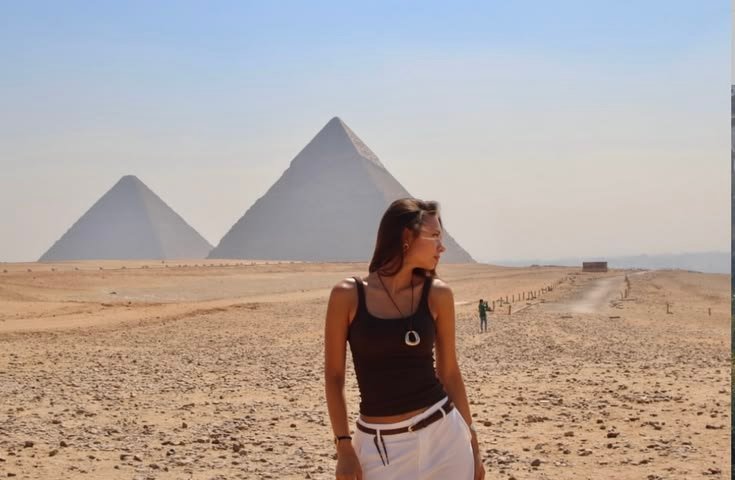
Yes, it is possible to spend 10 days exploring Egypt for less than $1,100 per person, excluding international flights. The key is to plan carefully, choose affordable accommodation, use local transportation, and focus on the country's most remarkable attractions without paying for luxury experiences. With a realistic budget, you can visit the Pyramids of Giza, discover ancient temples in Luxor, and enjoy the beauty of Aswan without spending a fortune.
Egypt offers different travel experiences for different budgets. You do not need a five-star hotel or a luxury Nile cruise to enjoy its history and culture. A combination of comfortable guesthouses, local restaurants, trains, and selected guided experiences can make a 10-day trip both affordable and memorable. You can also explore the destinations included in Deluxe Tours Egypt's travel packages when comparing itinerary ideas.

A reasonable target is approximately $950–$1,100 per person, excluding international flights. This estimate assumes budget accommodation, relatively inexpensive meals, economical intercity transportation, selected entrance tickets, and a few shared or group sightseeing experiences. The final cost depends on your travel dates, accommodation choices, exchange rates, and the attractions you decide to visit.
Accommodation may cost around $180–$250 for nine nights in hostels or simple guesthouses, particularly when you book ahead and avoid premium locations. Food can take approximately $120–$160 for ten days if you mix local restaurants, casual cafés, and inexpensive Egyptian meals. For more ideas about the capital, explore this Cairo travel guide.
Transportation between cities and local journeys may require around $100–$150, depending on the routes and services you choose. Set aside approximately $140–$180 for selected attraction tickets and another $100–$150 for shared tours or local guiding. A further allowance of $60–$100 can cover visa costs, tips, SIM cards, and small unexpected expenses. These are planning estimates rather than fixed prices, so leave some flexibility in your budget.
The best way to keep costs manageable is to focus on three destinations: Cairo, Aswan, and Luxor. This route combines Egypt's most famous landmarks with ancient temples and Nile scenery, without adding expensive domestic flights or a luxury cruise. It also follows a practical route through the country's main historical attractions, similar to the destinations featured in Egypt's classic tour itineraries.
Start your journey in Cairo, where you can spend three days discovering the capital's history and everyday atmosphere. On your first full sightseeing day, visit the Giza Pyramids and Great Sphinx, one of the most recognizable archaeological sites in the world. You can explore the Giza Plateau, admire the Great Pyramid, and enjoy views of the surrounding desert without booking an expensive private experience.
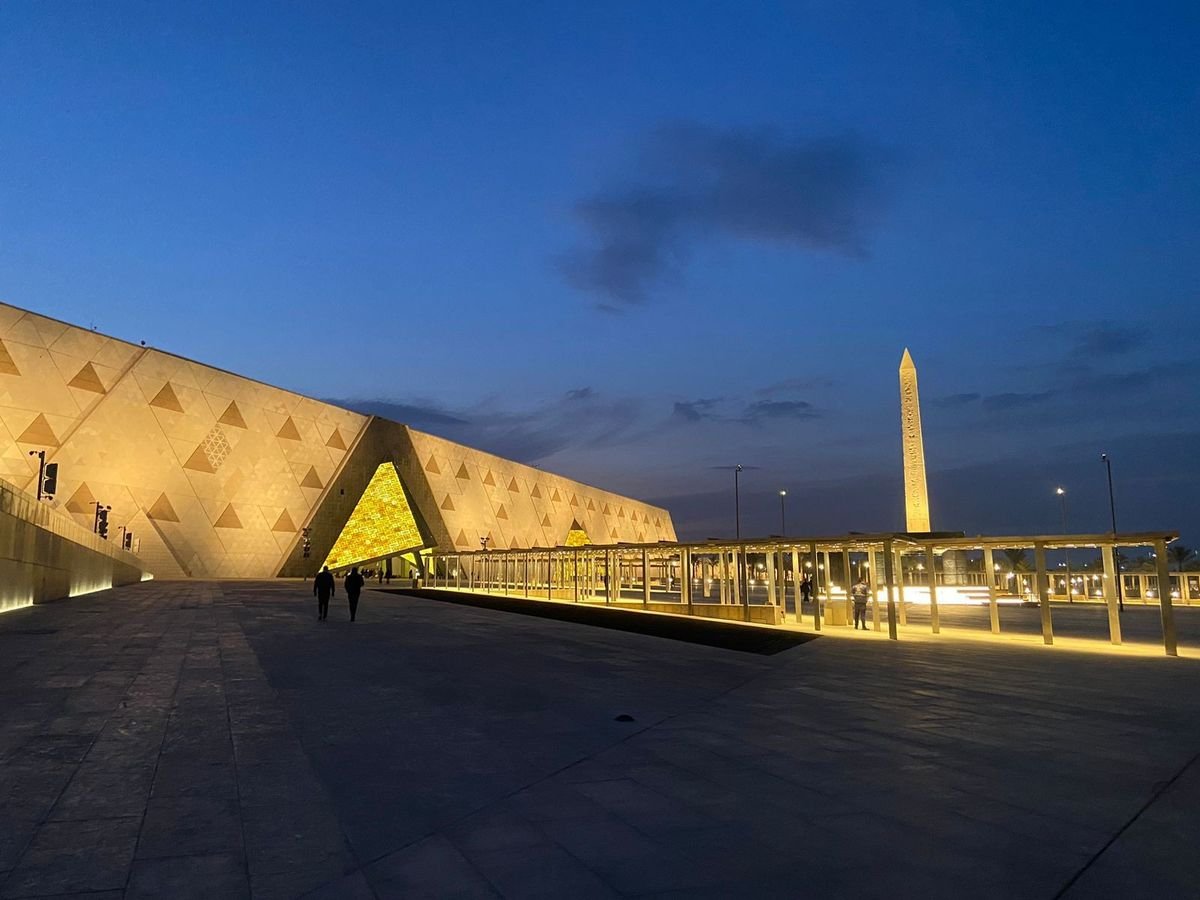
Spend another day exploring Cairo's museums and historic neighborhoods. Depending on your interests and ticket budget, you can visit the Grand Egyptian Museum or explore other important cultural attractions. In the evening, take a walk through the city, enjoy traditional Egyptian food, and experience the lively atmosphere around downtown Cairo.
For your third day, consider exploring Islamic Cairo and Khan el-Khalili, where you can discover historic streets, traditional architecture, and local shops. Walking around these areas is an enjoyable way to experience the city without spending much on activities. For more sightseeing ideas, see the best things to do in Cairo.

Travel south from Cairo to Aswan using an affordable train or bus option that fits your schedule. The journey takes several hours, so check departure times and current fares before booking. Choosing ground transportation instead of a domestic flight can help you protect your budget, although the cheapest option may take longer. For a wider look at the southern destinations on your route, explore Egypt's tours featuring Aswan and Abu Simbel.
Aswan offers a slower pace and beautiful scenery along the Nile. Start with a visit to Philae Temple, one of the area's most impressive ancient monuments, located on an island reached by boat. You can also explore the local markets, enjoy traditional Nubian food, and spend time along the river.
On your second day, consider a relaxing walk around Aswan or a shared felucca ride on the Nile. These traditional sailing boats offer a memorable way to enjoy the river and surrounding landscapes without booking an expensive cruise. If Abu Simbel is a priority, check the additional transportation and entrance costs before adding it to your itinerary, as the excursion can make a noticeable difference to a tight budget. You can compare the southern highlights in this Cairo, Luxor, and Abu Simbel tour.

Take a train from Aswan to Luxor, a journey that is much shorter than traveling from Cairo to Upper Egypt. After checking in at your accommodation, spend the afternoon relaxing or exploring the riverside area. If you arrive with enough time, you can visit Luxor Temple in the evening, when its illuminated architecture creates a particularly memorable atmosphere.
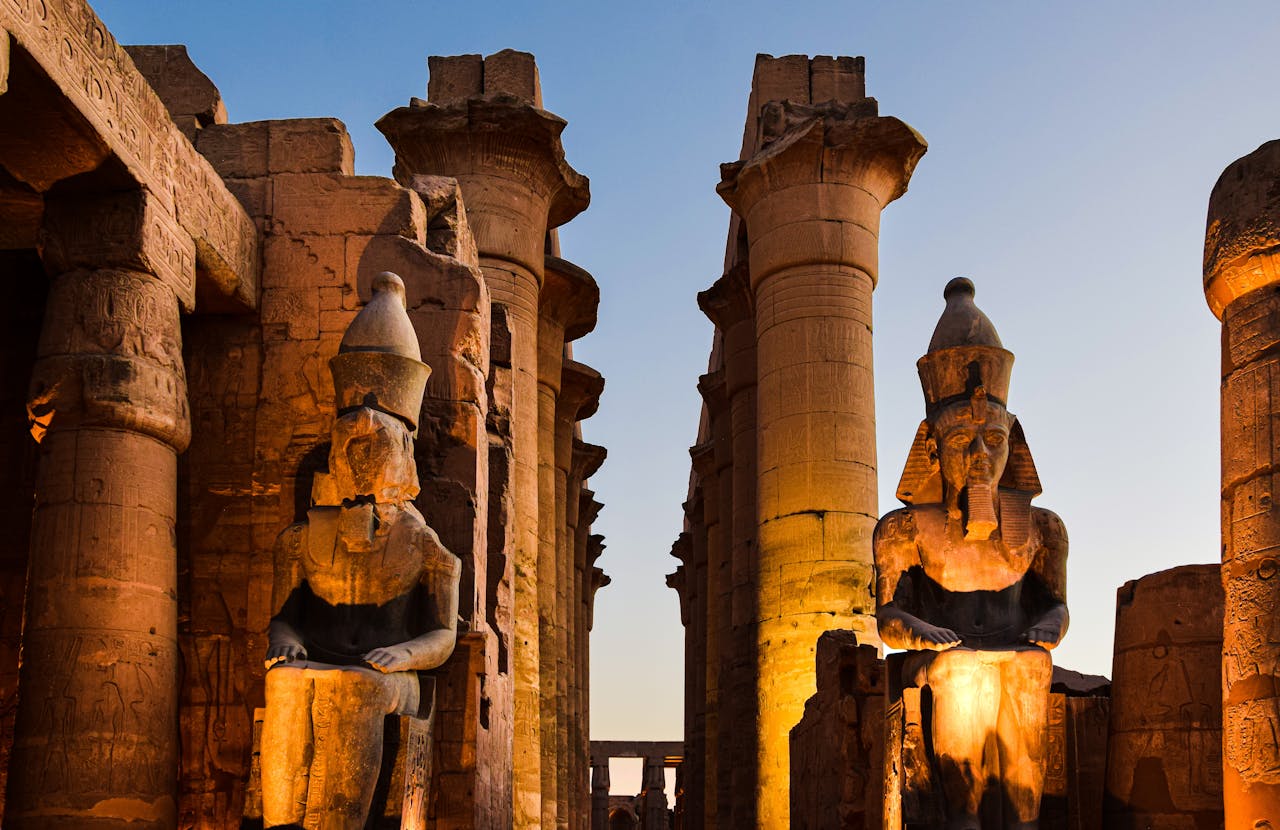
Use your first full day in Luxor to explore the East Bank, including Karnak Temple. Its enormous columns, courtyards, and ancient inscriptions make it one of Egypt's most impressive historical sites. You can also revisit Luxor Temple if you did not have enough time the previous evening.
On your second day, cross to the West Bank to discover the Valley of the Kings and the Temple of Hatshepsut. The Valley of the Kings is home to remarkable royal tombs decorated with colorful ancient artwork. Since transportation and entrance tickets can add up, compare shared excursions with independent transport before choosing how to explore the area. You can also use this Luxor travel guide to discover more about the city.

Depending on your international flight time, return to Cairo by train or another suitable transport option. It is best to leave enough time between your domestic journey and international departure, especially if you are traveling by train. If your flight leaves early, consider returning to Cairo the previous evening instead. For travelers who want a more organized route through the country's main historical destinations, this Luxor and Cairo tour offers another itinerary reference.

The biggest savings usually come from accommodation and transportation. Choose hostels, guesthouses, or simple hotels rather than luxury properties, and look for accommodation close to public transportation or the attractions you plan to visit. If you are traveling with another person, sharing a private room can sometimes offer better value than booking two separate beds. You can compare different destination combinations through Deluxe Tours Egypt before finalizing your route.
Eating local food is another easy way to control your expenses. Try Egyptian favorites such as koshari, ful medames, taameya, and freshly prepared sandwiches instead of relying on international restaurants. These meals are part of the local experience and can help keep daily food costs manageable. While exploring the capital, the Cairo attractions guide can help you plan your sightseeing days.
Book intercity transportation in advance when possible, compare available train and bus services, and avoid choosing domestic flights unless the time saved is worth the extra expense. For major archaeological sites, prioritize the attractions that interest you most rather than trying to visit every monument. You can also compare independent visits with shared excursions, especially when exploring places such as Karnak and Luxor Temple.

A traditional Nile cruise is one of Egypt's most memorable experiences, but it may push a strict $1,100 budget beyond its limit. Cruise prices vary according to the boat category, number of nights, season, and included meals and excursions. Instead of booking a cruise automatically, consider a short felucca ride in Aswan and explore the Nile Valley by train. If you decide to increase your budget, you can compare the available options through Deluxe Tours Egypt's Nile cruise experiences.
The shoulder seasons can offer a useful balance between sightseeing weather and accommodation prices. Consider May, September, or October, while remembering that temperatures in Upper Egypt can still be high, particularly during the summer months. Winter is generally more comfortable for exploring outdoor archaeological sites, but popular travel periods may bring higher accommodation demand. For more inspiration when choosing your travel dates, explore Luxor and its ancient attractions.

Yes, a $1,100 budget can be enough for a 10-day Egypt vacation if you plan carefully and are comfortable with a more independent travel style. It can cover budget accommodation, local meals, ground transportation, selected entrance tickets, and a few shared sightseeing experiences. However, it is not a realistic budget for luxury hotels, private transfers every day, premium tomb tickets, and a multi-night luxury Nile cruise. For a more comfortable or guided experience, compare your priorities with the available Egypt tour packages.
Egypt does not have to be an expensive destination to be unforgettable. With a well-planned route through Cairo, Aswan, and Luxor, you can experience the Pyramids, explore ancient temples, enjoy the Nile, and discover Egyptian culture while keeping your spending under control. Start planning your journey with Deluxe Tours Egypt and find an itinerary that matches your budget and travel style.
Discover now our answers to the most common questions that may come to your mind about tourism and trips to Egypt
Cultural, historical, adventure, and custom customized trips are just a few of the tours that Deluxe trips offer in Egypt and Jordan.
The Dead Sea, Petra in Jordan, the Pyramids of Giza, Luxor's historic temples, and many other famous sites can be expected to be explored with Deluxe Tours.
offer a hassle-free holiday, Deluxe Tours' packages generally include lodging, transport, meals, guided tours with experienced local experts, and entry fees to attractions.
Spring (March to May) and fall (September to November) offer the finest weather for sightseeing and outdoor activities, making those months the best times to visit Egypt and Jordan.
These two countries are close by, only a 1.5-hour flight apart, and when combined, offer a variety of distinctive experiences. We advise you to spend at least 12 days visiting both countries for a truly unforgettable experience
Combining the eclipse viewing with visits to historic sites like the Pyramids of Giza, the Valley of the Kings, and a Nile River cruise are highly recommended.
Yes, all classic tours include professional, licensed Egyptologist guides who provide in-depth historical insights at every site. Private guide options are also available for a more personalized experience.
Absolutely. We offer fully customizable itineraries based on your travel dates, budget, hotel preferences, cruise category, and specific interests such as photography, history, adventure, or luxury travel.
Classic Tour packages typically offer 4-star and 5-star hotels in Cairo and luxury Nile cruises. Boutique and ultra-luxury accommodations can also be arranged upon request.
Yes, Egypt’s main tourist destinations such as Cairo, Luxor, Aswan, and the Red Sea resorts are considered safe and well-secured. Our tours provide private transportation, licensed guides, and 24/7 on-ground support to ensure a safe and comfortable experience.
Classic Egypt Tours may take you on more extensive journeys (7–10 days) that explore Luxor, Aswan, and the Nile Valley, or they can be short trips (3–4 days) that focus on Cairo and Giza.
Yes, these tours are suitable for families, couples, solo travelers, and seniors. The pace can be adjusted, and private transportation ensures comfort throughout the journey.
Yes, U.S. passport holders require a tourist visa. It can be obtained upon arrival at Cairo Airport or applied for online through Egypt’s e-visa system.
Abu Simbel Temples are located in southern Egypt near the Sudanese border, about 280 km (175 miles) southwest of Aswan, on the western bank of Lake Nasser.
The temples were built by Pharaoh Ramesses II in the 13th century BC. They are famous for their colossal statues and for the incredible relocation project in the 1960s to save them from flooding after the construction of the Aswan High Dam.
Usually, no. Most Nile Cruises sail between Luxor and Aswan. While they don't sail to Abu Simbel, almost all cruises offer it as an optional add-on excursion while the ship is docked in Aswan.
Visitors usually spend 2–3 hours exploring both the Great Temple of Ramesses II and the Temple of Queen Nefertari.
Yes. The site is accessible and relatively flat, but the heat can be intense. Early morning visits are recommended for families and seniors.
Absolutely. The scale, history, and preservation story of Abu Simbel make it one of Egypt’s most breathtaking archaeological sites and a highlight of any trip to Egypt.
Yes! Unlike the Great Sphinx, your entry ticket includes access to the inner chambers of both the Great Temple of Ramesses II and the Temple of Nefertari. You can walk all the way back to the "Holy of Holies" sanctuary.
The Abu Simbel Sun Festival happens twice a year (around February 22 and October 22). On these dates, sunlight illuminates the inner sanctuary statues, an incredible ancient astronomical achievement.
Yes, it is commonly done as a day trip from Aswan, typically departing very early in the morning and returning by early afternoon.
Absolutely. The scale, history, and preservation story of Abu Simbel make it one of Egypt’s most breathtaking archaeological sites and a highlight of any trip to Egypt.
Most itineraries combine cultural highlights such as Cairo, Luxor, and Aswan with Red Sea resort cities like Hurghada, Sharm El Sheikh, or Marsa Alam.
Most tours include 2–4 nights at a Red Sea resort after exploring historical sites. Travelers looking for more relaxation often extend their stay.
Yes. The Red Sea is considered one of the world’s top diving destinations thanks to its rich marine life, colorful coral reefs, and exceptional underwater visibility.
Absolutely. Many itineraries combine a Nile cruise between Luxor and Aswan with a beach stay in Hurghada or Sharm El Sheikh.
Last. Use the Red Sea as your "recovery" period after the early mornings and heavy walking of the Pyramids and Nile cruises.
Major Red Sea resort areas are well-developed tourist destinations with strong security measures and established tourism infrastructure.
No. All resorts offer "Intro Dives" for beginners. Snorkeling is also excellent right off the hotel jetties.
Each resort area offers a different experience:
Hurghada – Ideal for families, all-inclusive resorts, and easy access from the Nile Valley.
Sharm El Sheikh – Known for luxury resorts, vibrant nightlife, and world-class diving.
Marsa Alam – Perfect for tranquility, eco-lodges, and untouched reefs.
El Gouna – A stylish lagoon-style resort town with a boutique atmosphere.
Your choice depends on whether you prefer relaxation, diving, nightlife, or exclusivity.
The Red Sea can be visited year-round. The period from October to April offers pleasantly warm temperatures ideal for sightseeing and beach relaxation, while the summer months are hotter but perfect for those who love long sunny days by the sea.
During your stay along the Red Sea, you can enjoy snorkeling, scuba diving, boat trips to nearby islands, desert safaris, spa treatments and relaxing on private beaches. Many resorts also offer water sports, sunset cruises, and evening entertainment programs.
During your stay along the Red Sea, you can enjoy snorkeling, scuba diving, boat trips to nearby islands, desert safaris, spa treatments and relaxing on private beaches. Many resorts also offer water sports, sunset cruises, and evening entertainment programs.
Our luxury tours focus on exclusivity, comfort, and personalized service. Instead of large group travel, you enjoy private guided visits, premium accommodations, seamless transfers, and carefully curated experiences that allow you to explore Egypt at your own pace with expert attention to detail.
Yes, many of our luxury packages feature a premium Nile cruise between Luxor and Aswan. Guests stay aboard high-end cruise vessels offering spacious suites, gourmet dining, spa services, and panoramic views of the Nile.
We carefully select five-star hotels and boutique luxury properties known for their exceptional service and prime locations. In Cairo, guests often enjoy stays near the pyramids or along the Nile, while in Upper Egypt and the Red Sea, we choose elegant resorts and heritage-inspired hotels that provide both comfort and authenticity.
Yes, our Egypt Luxury Tours are primarily private, allowing you to travel with your own dedicated Egyptologist guide and professional driver. This ensures flexibility, privacy, and a more immersive experience at every historical site.
Absolutely. Each luxury journey can be fully tailored to your interests, whether you prefer extended time at archaeological sites, exclusive dining experiences, spa retreats, or additional nights on the Red Sea. We design each itinerary to match your travel style and preferences.
Yes, our luxury packages typically include VIP airport meet-and-assist services at Cairo International Airport, ensuring a smooth arrival and departure experience with fast-track support.
These tours are perfect for couples, honeymooners, families seeking privacy, executive travelers, and anyone who values comfort, exclusivity, and personalized service while discovering Egypt’s timeless heritage.
Yes, primarily because you are never "on your own" in transit. You are escorted from the moment you land until you depart. Luxury tours also use vetted, high-security hotels and private transport, which minimizes the risk of common scams or petty theft.
Depending on availability and preference, we can arrange private pyramid visits, VIP access to selected sites, gourmet dinners with Nile views, spa treatments, and special cultural experiences that elevate your journey beyond traditional sightseeing.
Egypt offers extraordinary history and breathtaking landscapes. Experiencing it through a luxury journey allows you to explore iconic temples, cruise the Nile in elegance, and relax in world-class resorts, all while enjoying seamless service and refined comfort from beginning to end.
Egypt Budget Holidays are carefully designed travel packages that allow you to explore the country’s most iconic attractions at an affordable price. These tours combine smart planning, well-organized itineraries, and comfortable accommodations to ensure you experience the highlights of destinations such as Cairo, Luxor, and Aswan without stretching your budget.
Most budget itineraries include Egypt’s top highlights such as Cairo, Luxor, and Aswan. Travelers can visit the legendary Great Pyramid of Giza, explore ancient temples along the Nile, and experience local culture — all at an affordable price.
Excluding international flights, a well-planned budget itinerary usually costs between $800 and $1,100 USD. This includes domestic travel (trains/buses), entry fees, street food, and guesthouse accommodation.
Budget tours typically include clean and comfortable 3-star or quality 4-star hotels in convenient locations. While accommodations may not be luxury properties, they offer good service, essential amenities, and a pleasant stay after a full day of sightseeing.
Yes, budget tours are professionally guided by experienced Egyptologists who provide valuable historical insights at each site. Group tours are common in budget packages, helping reduce overall costs while maintaining a rich cultural experience.
Yes, budget packages typically include airport transfers, intercity transportation by air-conditioned vehicles or trains, and domestic flights when necessary, depending on the itinerary.
Absolutely. Budget holidays are popular among solo travelers, students, couples, and families looking for affordable adventures. Group settings can also be a great way to meet fellow travelers from around the world.
Egypt stands out as an ideal destination for travelers seeking exceptional value without sacrificing unforgettable experiences. The country brings together world-famous monuments, rich cultural traditions, and breathtaking landscapes, all available at comparatively affordable prices. From the ancient pyramids to majestic temples and a scenic Nile cruise, visitors can enjoy remarkable highlights while keeping expenses under control.
The "Shoulder Seasons" (May, September, and October) offer the best balance. You’ll find hotel rates 20–30% lower than the winter peak, and the heat is still manageable compared to the mid-summer blast.
Many budget tours offer flexible options, allowing you to add extra excursions, upgrade hotels or extend your stay. Optional visits to sites like Abu Simbel Temples can often be arranged at an additional cost.
Egypt offers couples a rare blend of romance, history, and exotic beauty. From watching the sunset beside the pyramids in Giza to sailing peacefully along the Nile near Aswan, every moment feels timeless and unforgettable. The atmosphere of ancient wonders combined with elegant hospitality creates a truly magical setting for newlyweds.
Most honeymoon itineraries include romantic stays in Cairo, cultural exploration in Luxor, and relaxing escapes in Red Sea destinations such as Sharm El Sheikh or Hurghada. This combination allows couples to balance discovery with privacy and relaxation.
Luxor Hot Air Balloon: Drifting over the Valley of the Kings at sunrise.
Private Felucca at Sunset: A 2-hour private sail in Aswan with traditional music and snacks.
Pyramid Dinner: Dining at 9 Pyramids Lounge or 139 Pavilion at the Mena House, where the pyramids are your backdrop.
Yes, Egypt Honeymoon Tours are typically arranged as private journeys, giving couples the freedom to explore at their own pace with a dedicated guide and private transfers. This ensures comfort, flexibility and intimate moments throughout the trip.
Honeymoon packages feature carefully selected four- and five-star hotels, boutique properties, and luxury resorts known for their romantic ambiance. Couples may enjoy Nile-view rooms, private balconies, spa treatments, and beachfront suites designed for comfort and privacy.
Absolutely. After exploring ancient temples and historic sites, couples can unwind on the pristine beaches of the Red Sea, enjoy spa treatments, or simply relax in a tranquil resort setting.
The most popular months for honeymoons are from October to April, when the weather is pleasantly warm and ideal for sightseeing and beach relaxation. However, Egypt remains a year-round destination for romance and discovery.
For international couples, a marriage certificate is not required to share a hotel room or cruise cabin. However, bringing a copy can sometimes help you secure "honeymooner" perks and upgrades at check-in.
Yes, every honeymoon can be tailored to reflect your personal style and preferences. Whether you envision more cultural exploration, additional beach relaxation in Sharm El Sheikh or a luxury retreat in Hurghada, your itinerary can be adjusted to create the perfect romantic balance.
Yes, Egypt is a year-round destination. The cooler months from autumn through spring are especially popular for honeymoons due to pleasant weather, while summer months offer sunny beach escapes and attractive resort offers.
Egypt combines ancient history, breathtaking landscapes, and serene coastal retreats in one extraordinary setting. From exploring legendary monuments to relaxing by the sea, it offers couples a rare opportunity to celebrate their love surrounded by beauty, culture, and unforgettable experiences.