Cultural, historical, adventure, and custom customized trips are just a few of the tours that Deluxe trips offer in Egypt and Jordan.

There's a moment, right as the sun clears the horizon over the Giza Plateau, when the Great Pyramid stops being a photograph you've seen a thousand times and becomes something else entirely: a wall of golden stone rising in front of you, still warm-toned in the early light after four and a half thousand years standing in the desert. This is what a trip to Cairo and Giza actually feels like: not a checklist of monuments, but a string of moments like this one, each a little different from what you expected, each better than the photos ever managed to capture. Here's what that experience looks like, start to finish.
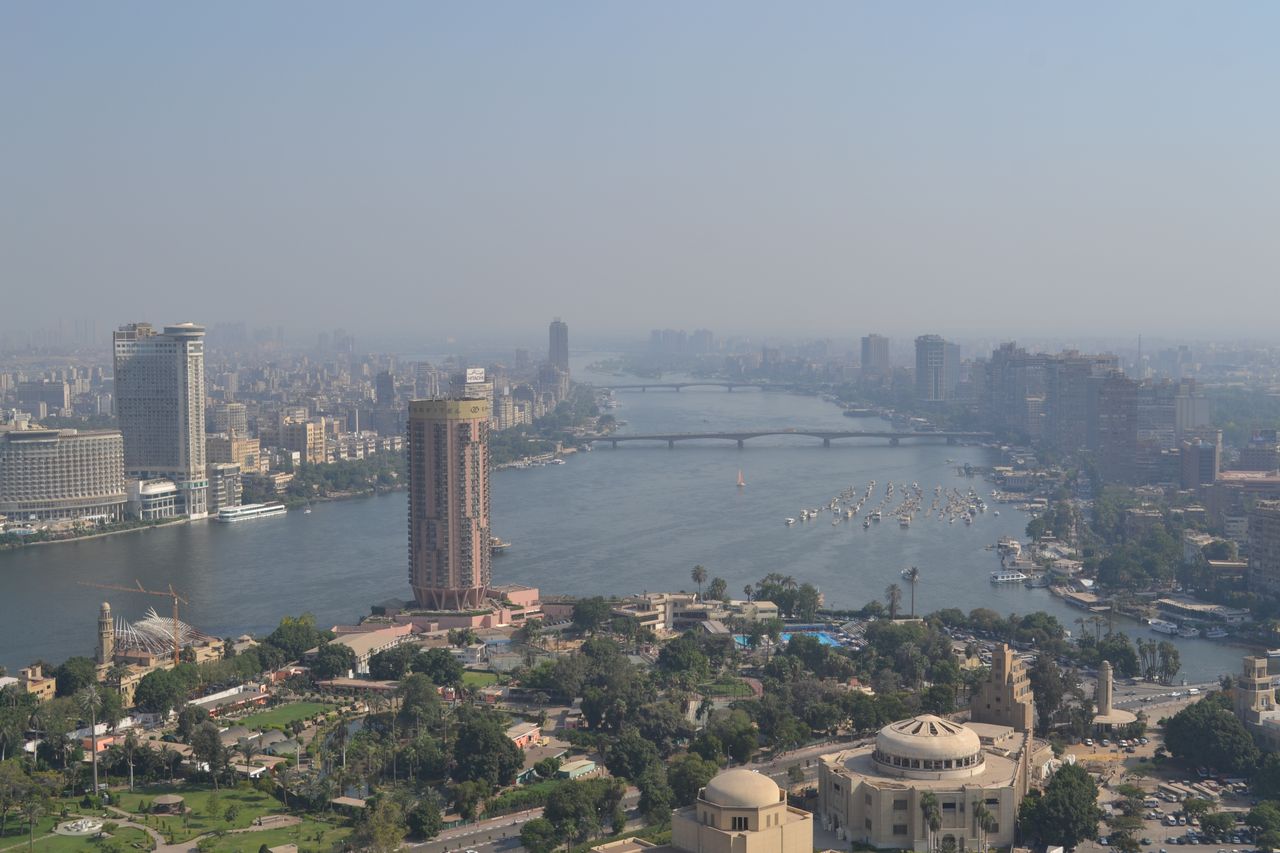
It usually starts the evening before, from a hotel balcony or a rooftop restaurant somewhere in the city, when you catch your first real glimpse of Cairo at night: a sprawl of light stretching to the horizon in every direction, minarets lit up between apartment towers, and somewhere out past the edge of the glow, if you know where to look, the faint outline of the pyramids themselves, dark against a slightly darker sky. It's a strange thing to realize you're this close already. Most travelers don't sleep quite as well as they expect to that night, not from jet lag, but from anticipation.
You arrive at the Giza Plateau early, while the light is still soft and the shuttle buses are just beginning their loop for the day. Your guide walks you up toward the Great Pyramid of Khufu first, and no amount of preparation quite braces you for its scale up close: the individual blocks are taller than you are, stacked in rows that vanish upward into the sky. From there, the plateau opens up: the Pyramid of Khafre catching the sun at an angle that makes it look, for a moment, taller than its neighbor, even though it isn't; the smaller Pyramid of Menkaure completing the trio; and finally the Great Sphinx, gazing east with an expression that's somehow both serene and unreadable, its face weathered by wind and time in a way that makes it feel more real than any restoration could.
If you choose to go inside the Great Pyramid, the passage in is steep, narrow, and warm, ending in the bare granite King's Chamber, empty now, but no less powerful a room to stand in once you know what it once held. Back outside, at the Panorama Viewpoint, all three pyramids line up together across the sand and this is where most travelers stop talking for a minute and just look. A camel ride out to this spot, silhouetted against the desert with the pyramids behind you, is the kind of moment that ends up as someone's favorite photo from the entire trip, proof, later, that you were actually there.
By late morning, a short walk across the plateau brings you to the Grand Egyptian Museum, and the scale of the day shifts again, this time from ancient stone to golden treasure. A colossal statue of Ramses II greets you in the soaring entrance hall, tall enough that you have to tilt your head back to take in his face. Deeper inside, the collection unfolds chronologically, room after room of statues, sarcophagi, and everyday objects that make five millennia of history feel suddenly close. Then comes the moment most people came for: the complete collection of Tutankhamun's burial treasures, displayed together for the first time ever, including the gold death mask that's become the single most recognizable image of Ancient Egypt. Your guide slows down here, translating the hieroglyphs around you and explaining the beliefs behind mummification and the journey to the afterlife: details that turn glass cases of gold into a genuinely moving story rather than just an impressive display.
Outside again, beside the museum, sits the full-size Khufu ship, a 4,500-year-old ceremonial vessel found buried next to the Great Pyramid, its wood somehow still intact after all this time. It's a quieter moment after the intensity of the museum, and a good place to pause before lunch.
After lunch, the pace changes again as you head into the heart of the city. At the Saladin Citadel, the alabaster domes of the Muhammad Ali Mosque catch the afternoon light, and stepping inside, the space opens into a vast, hushed hall lit by dozens of hanging lamps, the air cool after the sun outside. From the ramparts, all of Cairo spreads out below: minarets, rooftops, and the Nile cutting through the middle of it all, with the pyramids sometimes visible as a faint shape on the horizon, a reminder of how far you've come since sunrise.
A short drive away, Coptic Cairo feels like stepping into an entirely different century: the Hanging Church suspended over the remains of a Roman fortress, incense drifting through stone corridors that have stood since the earliest days of Christianity in Egypt, and the Ben Ezra Synagogue nearby tracing a different, equally old thread of the city's layered religious history. It's a slower, quieter few hours, and a good counterweight to the grandeur of the morning.
As the heat of the day finally breaks, you board a traditional felucca, no engine, just a single sail catching the evening breeze, and drift along the Nile as the sky turns orange, then pink, then a deep blue-violet over the water. Cairo's skyline lights up gradually as you sail, minaret by minaret, bridge by bridge, and for an hour, the noise of the city fades into the sound of water against the hull and the occasional call of a boatman further downriver. Some travelers pair this with a simple dinner on board; others just watch the sky, quietly, as the temperature drops and the first stars come out over the river.
The day ends the way Cairo does best: in the lantern-lit lanes of Khan El-Khalili, where copper lamps and spice stalls spill into narrow alleys, and the smell of grilled meat and fresh mint tea follows you from corner to corner. Shopkeepers call out good-naturedly as you pass, more invitation than pressure, and the market feels just as alive at ten at night as it does at noon. Somewhere nearby, at Wekalet El Ghouri, whirling dervishes spin in perfect rhythm to a live band inside a centuries-old hall, a fitting final image for a day that started at the foot of the pyramids and ends in a marketplace that's been open, in one form or another, since the 1300s.
Travelers who add a second day to their Cairo stay often find it just as memorable as the first, in a quieter way. Saqqara, roughly half an hour outside the city, holds the Step Pyramid of Djoser, older than anything at Giza, and the missing link in how pyramid-building evolved over centuries. Unlike the empty interior of the Great Pyramid, several tombs here can be entered, their interior walls still carrying painted hieroglyphics in colors that have barely faded. With far fewer visitors than Giza, mornings here can feel almost private, just you, your guide, and several thousand years of history with no crowd in the way.
None of this happens by accident. It's the result of good timing (arriving at Giza before the crowds, saving the felucca for exactly the right light), the right order of sites, so the day builds rather than repeats itself, and a guide who knows exactly when to talk and when to let you just take it in. That's the difference between seeing Cairo's highlights and actually experiencing them. Whether you're drawn to [our Luxury Egypt Tours] for a fully tailored, top-to-bottom experience, or [our Classic Egypt Tours] for a well-paced introduction to Egypt's essentials, [a private Egyptologist-guided day] turns a checklist of sights into a day you'll actually remember, and if Saqqara, Alexandria, or a Nile cruise appeal as an extension, a [multi-day Egypt itinerary] strings several days like this one together without any of the logistics falling on you. If you'd rather understand the practical side before you commit (tickets, timing, getting around), our post on [planning the logistics yourself] walks through all of it.
Reading about Cairo and the Giza Pyramids is one thing. Standing in front of the Great Pyramid at sunrise, holding your breath inside the Grand Egyptian Museum, sailing the Nile as the sky turns gold, and losing an evening in a centuries-old market. That's something else entirely. [Explore our Egypt tour packages] and start planning the day you'll be describing for years to come.
Discover now our answers to the most common questions that may come to your mind about tourism and trips to Egypt
Cultural, historical, adventure, and custom customized trips are just a few of the tours that Deluxe trips offer in Egypt and Jordan.
The Dead Sea, Petra in Jordan, the Pyramids of Giza, Luxor's historic temples, and many other famous sites can be expected to be explored with Deluxe Tours.
offer a hassle-free holiday, Deluxe Tours' packages generally include lodging, transport, meals, guided tours with experienced local experts, and entry fees to attractions.
Spring (March to May) and fall (September to November) offer the finest weather for sightseeing and outdoor activities, making those months the best times to visit Egypt and Jordan.
These two countries are close by, only a 1.5-hour flight apart, and when combined, offer a variety of distinctive experiences. We advise you to spend at least 12 days visiting both countries for a truly unforgettable experience
Combining the eclipse viewing with visits to historic sites like the Pyramids of Giza, the Valley of the Kings, and a Nile River cruise are highly recommended.
Yes, all classic tours include professional, licensed Egyptologist guides who provide in-depth historical insights at every site. Private guide options are also available for a more personalized experience.
Absolutely. We offer fully customizable itineraries based on your travel dates, budget, hotel preferences, cruise category, and specific interests such as photography, history, adventure, or luxury travel.
Classic Tour packages typically offer 4-star and 5-star hotels in Cairo and luxury Nile cruises. Boutique and ultra-luxury accommodations can also be arranged upon request.
Yes, Egypt’s main tourist destinations such as Cairo, Luxor, Aswan, and the Red Sea resorts are considered safe and well-secured. Our tours provide private transportation, licensed guides, and 24/7 on-ground support to ensure a safe and comfortable experience.
Classic Egypt Tours may take you on more extensive journeys (7–10 days) that explore Luxor, Aswan, and the Nile Valley, or they can be short trips (3–4 days) that focus on Cairo and Giza.
Yes, these tours are suitable for families, couples, solo travelers, and seniors. The pace can be adjusted, and private transportation ensures comfort throughout the journey.
Yes, U.S. passport holders require a tourist visa. It can be obtained upon arrival at Cairo Airport or applied for online through Egypt’s e-visa system.
Abu Simbel Temples are located in southern Egypt near the Sudanese border, about 280 km (175 miles) southwest of Aswan, on the western bank of Lake Nasser.
The temples were built by Pharaoh Ramesses II in the 13th century BC. They are famous for their colossal statues and for the incredible relocation project in the 1960s to save them from flooding after the construction of the Aswan High Dam.
Usually, no. Most Nile Cruises sail between Luxor and Aswan. While they don't sail to Abu Simbel, almost all cruises offer it as an optional add-on excursion while the ship is docked in Aswan.
Visitors usually spend 2–3 hours exploring both the Great Temple of Ramesses II and the Temple of Queen Nefertari.
Yes. The site is accessible and relatively flat, but the heat can be intense. Early morning visits are recommended for families and seniors.
Absolutely. The scale, history, and preservation story of Abu Simbel make it one of Egypt’s most breathtaking archaeological sites and a highlight of any trip to Egypt.
Yes! Unlike the Great Sphinx, your entry ticket includes access to the inner chambers of both the Great Temple of Ramesses II and the Temple of Nefertari. You can walk all the way back to the "Holy of Holies" sanctuary.
The Abu Simbel Sun Festival happens twice a year (around February 22 and October 22). On these dates, sunlight illuminates the inner sanctuary statues, an incredible ancient astronomical achievement.
Yes, it is commonly done as a day trip from Aswan, typically departing very early in the morning and returning by early afternoon.
Absolutely. The scale, history, and preservation story of Abu Simbel make it one of Egypt’s most breathtaking archaeological sites and a highlight of any trip to Egypt.
Most itineraries combine cultural highlights such as Cairo, Luxor, and Aswan with Red Sea resort cities like Hurghada, Sharm El Sheikh, or Marsa Alam.
Most tours include 2–4 nights at a Red Sea resort after exploring historical sites. Travelers looking for more relaxation often extend their stay.
Yes. The Red Sea is considered one of the world’s top diving destinations thanks to its rich marine life, colorful coral reefs, and exceptional underwater visibility.
Absolutely. Many itineraries combine a Nile cruise between Luxor and Aswan with a beach stay in Hurghada or Sharm El Sheikh.
Last. Use the Red Sea as your "recovery" period after the early mornings and heavy walking of the Pyramids and Nile cruises.
Major Red Sea resort areas are well-developed tourist destinations with strong security measures and established tourism infrastructure.
No. All resorts offer "Intro Dives" for beginners. Snorkeling is also excellent right off the hotel jetties.
Each resort area offers a different experience:
Hurghada – Ideal for families, all-inclusive resorts, and easy access from the Nile Valley.
Sharm El Sheikh – Known for luxury resorts, vibrant nightlife, and world-class diving.
Marsa Alam – Perfect for tranquility, eco-lodges, and untouched reefs.
El Gouna – A stylish lagoon-style resort town with a boutique atmosphere.
Your choice depends on whether you prefer relaxation, diving, nightlife, or exclusivity.
The Red Sea can be visited year-round. The period from October to April offers pleasantly warm temperatures ideal for sightseeing and beach relaxation, while the summer months are hotter but perfect for those who love long sunny days by the sea.
During your stay along the Red Sea, you can enjoy snorkeling, scuba diving, boat trips to nearby islands, desert safaris, spa treatments and relaxing on private beaches. Many resorts also offer water sports, sunset cruises, and evening entertainment programs.
During your stay along the Red Sea, you can enjoy snorkeling, scuba diving, boat trips to nearby islands, desert safaris, spa treatments and relaxing on private beaches. Many resorts also offer water sports, sunset cruises, and evening entertainment programs.
Our luxury tours focus on exclusivity, comfort, and personalized service. Instead of large group travel, you enjoy private guided visits, premium accommodations, seamless transfers, and carefully curated experiences that allow you to explore Egypt at your own pace with expert attention to detail.
Yes, many of our luxury packages feature a premium Nile cruise between Luxor and Aswan. Guests stay aboard high-end cruise vessels offering spacious suites, gourmet dining, spa services, and panoramic views of the Nile.
We carefully select five-star hotels and boutique luxury properties known for their exceptional service and prime locations. In Cairo, guests often enjoy stays near the pyramids or along the Nile, while in Upper Egypt and the Red Sea, we choose elegant resorts and heritage-inspired hotels that provide both comfort and authenticity.
Yes, our Egypt Luxury Tours are primarily private, allowing you to travel with your own dedicated Egyptologist guide and professional driver. This ensures flexibility, privacy, and a more immersive experience at every historical site.
Absolutely. Each luxury journey can be fully tailored to your interests, whether you prefer extended time at archaeological sites, exclusive dining experiences, spa retreats, or additional nights on the Red Sea. We design each itinerary to match your travel style and preferences.
Yes, our luxury packages typically include VIP airport meet-and-assist services at Cairo International Airport, ensuring a smooth arrival and departure experience with fast-track support.
These tours are perfect for couples, honeymooners, families seeking privacy, executive travelers, and anyone who values comfort, exclusivity, and personalized service while discovering Egypt’s timeless heritage.
Yes, primarily because you are never "on your own" in transit. You are escorted from the moment you land until you depart. Luxury tours also use vetted, high-security hotels and private transport, which minimizes the risk of common scams or petty theft.
Depending on availability and preference, we can arrange private pyramid visits, VIP access to selected sites, gourmet dinners with Nile views, spa treatments, and special cultural experiences that elevate your journey beyond traditional sightseeing.
Egypt offers extraordinary history and breathtaking landscapes. Experiencing it through a luxury journey allows you to explore iconic temples, cruise the Nile in elegance, and relax in world-class resorts, all while enjoying seamless service and refined comfort from beginning to end.
Egypt Budget Holidays are carefully designed travel packages that allow you to explore the country’s most iconic attractions at an affordable price. These tours combine smart planning, well-organized itineraries, and comfortable accommodations to ensure you experience the highlights of destinations such as Cairo, Luxor, and Aswan without stretching your budget.
Most budget itineraries include Egypt’s top highlights such as Cairo, Luxor, and Aswan. Travelers can visit the legendary Great Pyramid of Giza, explore ancient temples along the Nile, and experience local culture — all at an affordable price.
Excluding international flights, a well-planned budget itinerary usually costs between $800 and $1,100 USD. This includes domestic travel (trains/buses), entry fees, street food, and guesthouse accommodation.
Budget tours typically include clean and comfortable 3-star or quality 4-star hotels in convenient locations. While accommodations may not be luxury properties, they offer good service, essential amenities, and a pleasant stay after a full day of sightseeing.
Yes, budget tours are professionally guided by experienced Egyptologists who provide valuable historical insights at each site. Group tours are common in budget packages, helping reduce overall costs while maintaining a rich cultural experience.
Yes, budget packages typically include airport transfers, intercity transportation by air-conditioned vehicles or trains, and domestic flights when necessary, depending on the itinerary.
Absolutely. Budget holidays are popular among solo travelers, students, couples, and families looking for affordable adventures. Group settings can also be a great way to meet fellow travelers from around the world.
Egypt stands out as an ideal destination for travelers seeking exceptional value without sacrificing unforgettable experiences. The country brings together world-famous monuments, rich cultural traditions, and breathtaking landscapes, all available at comparatively affordable prices. From the ancient pyramids to majestic temples and a scenic Nile cruise, visitors can enjoy remarkable highlights while keeping expenses under control.
The "Shoulder Seasons" (May, September, and October) offer the best balance. You’ll find hotel rates 20–30% lower than the winter peak, and the heat is still manageable compared to the mid-summer blast.
Many budget tours offer flexible options, allowing you to add extra excursions, upgrade hotels or extend your stay. Optional visits to sites like Abu Simbel Temples can often be arranged at an additional cost.
Egypt offers couples a rare blend of romance, history, and exotic beauty. From watching the sunset beside the pyramids in Giza to sailing peacefully along the Nile near Aswan, every moment feels timeless and unforgettable. The atmosphere of ancient wonders combined with elegant hospitality creates a truly magical setting for newlyweds.
Most honeymoon itineraries include romantic stays in Cairo, cultural exploration in Luxor, and relaxing escapes in Red Sea destinations such as Sharm El Sheikh or Hurghada. This combination allows couples to balance discovery with privacy and relaxation.
Luxor Hot Air Balloon: Drifting over the Valley of the Kings at sunrise.
Private Felucca at Sunset: A 2-hour private sail in Aswan with traditional music and snacks.
Pyramid Dinner: Dining at 9 Pyramids Lounge or 139 Pavilion at the Mena House, where the pyramids are your backdrop.
Yes, Egypt Honeymoon Tours are typically arranged as private journeys, giving couples the freedom to explore at their own pace with a dedicated guide and private transfers. This ensures comfort, flexibility and intimate moments throughout the trip.
Honeymoon packages feature carefully selected four- and five-star hotels, boutique properties, and luxury resorts known for their romantic ambiance. Couples may enjoy Nile-view rooms, private balconies, spa treatments, and beachfront suites designed for comfort and privacy.
Absolutely. After exploring ancient temples and historic sites, couples can unwind on the pristine beaches of the Red Sea, enjoy spa treatments, or simply relax in a tranquil resort setting.
The most popular months for honeymoons are from October to April, when the weather is pleasantly warm and ideal for sightseeing and beach relaxation. However, Egypt remains a year-round destination for romance and discovery.
For international couples, a marriage certificate is not required to share a hotel room or cruise cabin. However, bringing a copy can sometimes help you secure "honeymooner" perks and upgrades at check-in.
Yes, every honeymoon can be tailored to reflect your personal style and preferences. Whether you envision more cultural exploration, additional beach relaxation in Sharm El Sheikh or a luxury retreat in Hurghada, your itinerary can be adjusted to create the perfect romantic balance.
Yes, Egypt is a year-round destination. The cooler months from autumn through spring are especially popular for honeymoons due to pleasant weather, while summer months offer sunny beach escapes and attractive resort offers.
Egypt combines ancient history, breathtaking landscapes, and serene coastal retreats in one extraordinary setting. From exploring legendary monuments to relaxing by the sea, it offers couples a rare opportunity to celebrate their love surrounded by beauty, culture, and unforgettable experiences.